
Transporter-targeted pharmacology
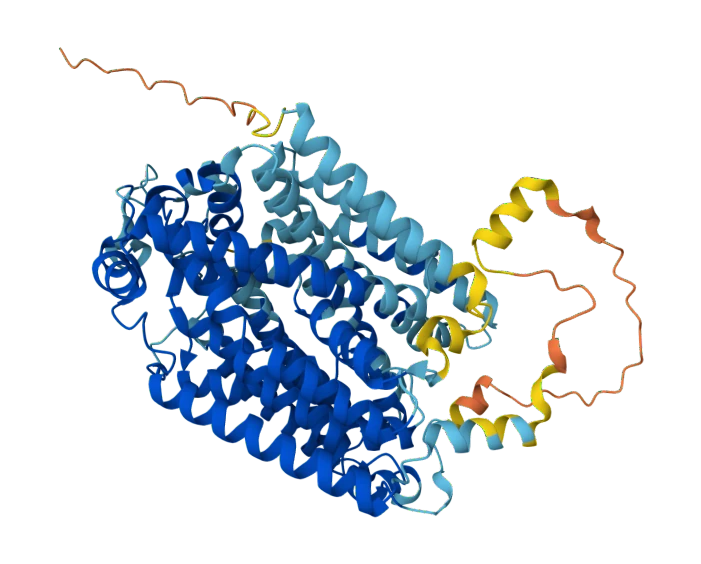
SGLT and GLUT modelling, selectivity determinants and the molecular logic of transport relevant to metabolic disease and cancer. Cryo-EM, AlphaFold2 and free-energy methods turned into design rules.
Molecular Events & Design of Pharmaceuticals
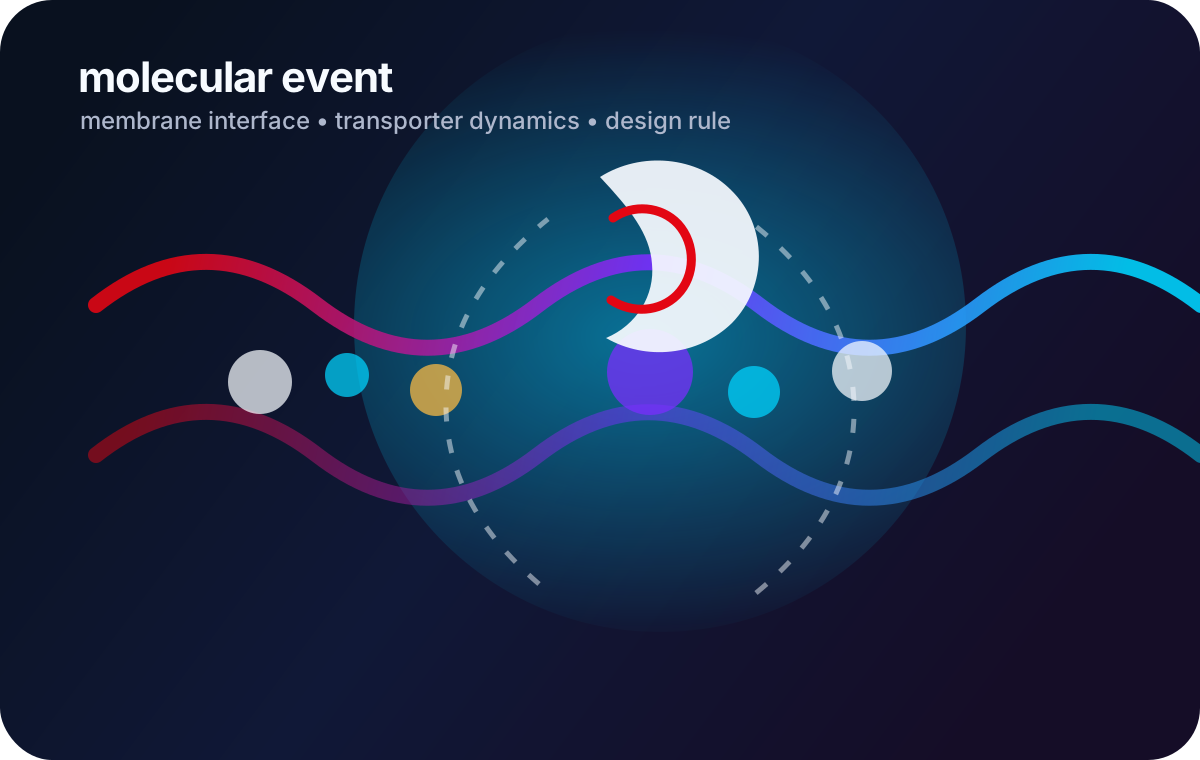
We study the molecular events that decide whether a compound becomes a therapeutic tool: membrane insertion, transporter selectivity, antimicrobial action, and clinically interpretable AI.
MEDΦ combines molecular biophysics, numerical modelling and AI-assisted biomedical engineering. The central question is pragmatic: which microscopic events can be turned into actionable design rules?
We connect atomistic simulation, membrane and transporter pharmacology and clinical machine learning to explain mechanisms and support rational therapeutic design.
Four directions, one method: turn molecular events into rules that hold up numerically and clinically.
SGLT and GLUT modelling, selectivity determinants and the molecular logic of transport relevant to metabolic disease and cancer. Cryo-EM, AlphaFold2 and free-energy methods turned into design rules.
Mechanisms of surfactants, antiseptics and membrane-active compounds against resistant bacteria, including AI-generated candidates aimed at specific bacterial microdomains.
Realistic bacterial envelopes and asymmetric bilayers, micropipette aspiration and flicker-noise spectroscopy, plus numerical tools that quantify membrane mechanics and interaction energetics.
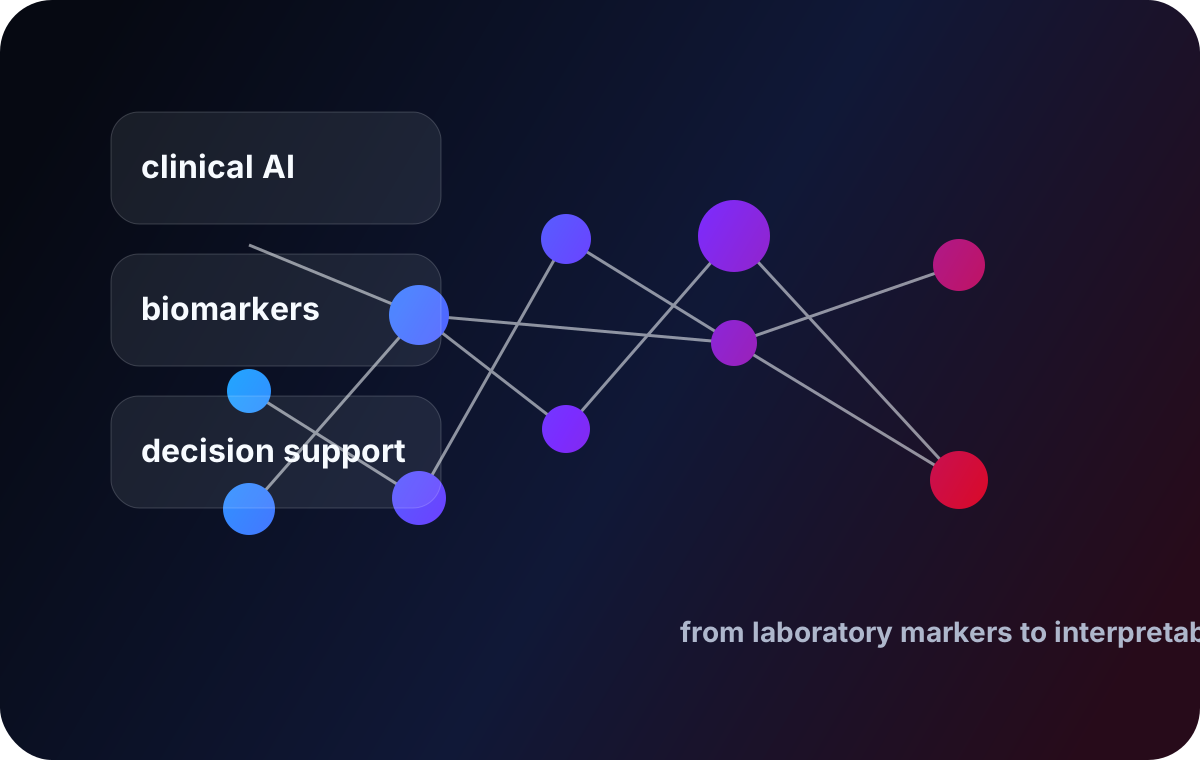
Interpretable machine learning on laboratory markers and medical images: coronary-artery and multi-sequence MRI pipelines, histopathology analysis and clinical decision support.
Grouped by domain rather than ranked. Each can grow into its own page.
Computational insight into human sodium-glucose transporters and the design challenge of selective SGLT1 inhibition.
Deactivation of sodium-dependent glucose transport for targeted anticancer therapy, framed as a transporter-level intervention.
Molecular guidelines for promising antimicrobial agents and AI-generated candidates aimed at bacterial microdomains.
Numerical analysis of membrane interactions and descriptor-driven selection of antimicrobial detergents and drug-delivery aids.
More realistic E. coli membrane systems for molecular dynamics, and how membrane complexity shapes mechanical parameters.
Interpretable machine learning on laboratory markers and medical images to support non-invasive clinical assessment.
Every member has a profile page. Click through to read more.

Group leader · Associate Professor
Sebastian Kraszewski leads the MEDΦ Laboratory at the Department of Biomedical Engineering. He earned his PhD in 2010 at the Université de Franche-Comté in Besançon, working on the computational biophysics of carbon-nanotube interactions with biological membranes, and his habilitation in 2020 at the Silesian University of Technology on numerical methods in biomedical engineering.
His research connects atomistic simulation, membrane and transporter pharmacology, antimicrobial design and AI-assisted biomedical engineering. He has led the OPUS grant INNOSEPT on broad-spectrum antiseptics and the Foundation for Polish Science Homing Plus project GLU-TAT, and his work is indexed in Web of Science and Scopus with more than 1000 citations.
Sebastian Kraszewski kieruje laboratorium MEDΦ w Katedrze Inżynierii Biomedycznej. Doktorat obronił w 2010 r. na Université de Franche-Comté w Besançon, badając obliczeniowo oddziaływania nanorurek węglowych z błonami biologicznymi, a habilitację uzyskał w 2020 r. na Politechnice Śląskiej w zakresie metod numerycznych w inżynierii biomedycznej.
Jego badania łączą symulacje atomistyczne, farmakologię błon i transporterów, projektowanie środków przeciwdrobnoustrojowych oraz inżynierię biomedyczną wspieraną przez AI. Kierował grantem OPUS INNOSEPT poświęconym antyseptykom o szerokim spektrum oraz projektem FNP Homing Plus GLU-TAT, a jego dorobek indeksowany w Web of Science i Scopus przekracza 1000 cytowań.
Molecular modelling, membrane pharmacology and AI/ML, with links to the source.
Frontiers in Molecular Biosciences. A roadmap toward selective SGLT1 inhibition built from cryo-EM, AlphaFold2 and free-energy calculations.
doi: 10.3389/fmolb.2025.1668400Scientific Reports. Generative design of membrane-active antimicrobials aimed at cardiolipin-rich microdomains.
doi: 10.1038/s41598-025-31350-1Journal of Chemical Information and Modeling. Molecular dynamics of a next-generation antibiotic in complex and single-membrane systems.
doi: 10.1021/acs.jcim.4c00228Biophysical Journal. Does electrostatics matter? A molecular account of two everyday antiseptics.
doi: 10.1016/j.bpj.2021.06.027International Journal of Molecular Sciences. A systematic molecular-dynamics route to comparing antimicrobial surfactants.
doi: 10.3390/ijms222010939For students, clinicians and industrial partners who need mechanism-driven design in molecular modelling, membrane-active therapeutics, transporter pharmacology and biomedical AI.