Microfluidic Biophysics and Multiscale Bioengineering.
About
Dominik Drabik earned his PhD in 2020 and his habilitation in 2025 at the Wrocław University of Science and Technology. During PhD he was working on biomechanics of lipid membranes, integrating experimental techniques with numerical methods in biomedical engineering. Nowadays, he leads multi-scale biophysical research, bridging computational modeling, custom data analytics, and microfluidic bio-design.
Dominik Drabik uzyskał stopień doktora w 2020 roku, a doktora habilitowanego w 2025 roku na Politechnice Wrocławskiej. Podczas doktoratu zajmował się biomechaniką błon lipidowych, łącząc techniki eksperymentalne z metodami numerycznymi w inżynierii biomedycznej. Obecnie prowadzi wieloskalowe badania biofizyczne, łącząc modelowanie obliczeniowe, autorską analizę danych i projektowanie mikroukładów do zastosowań biologicznych.
Research interests
microfluidicsmembrane biophysicsmolecular dynamicsCFD · OpenFOAMGUVscell culture under flowPython · MATLAB
Research on this page
01
Microfluidic Biophysics and Multiscale Bioengineering
My research bridges microfluidics, membrane biophysics, molecular dynamics, computational modelling, and biomedical engineering. It focuses on developing experimental platforms and computational methods for studying biological membranes, their physical properties, and their interactions with molecules and cells.
A central element of my current work is the development of microfluidic platforms for biophysical experiments. These systems are designed to provide precise control over flow, mass transport, diffusion, and the local experimental environment, enabling quantitative studies of lipid membranes and living cells.
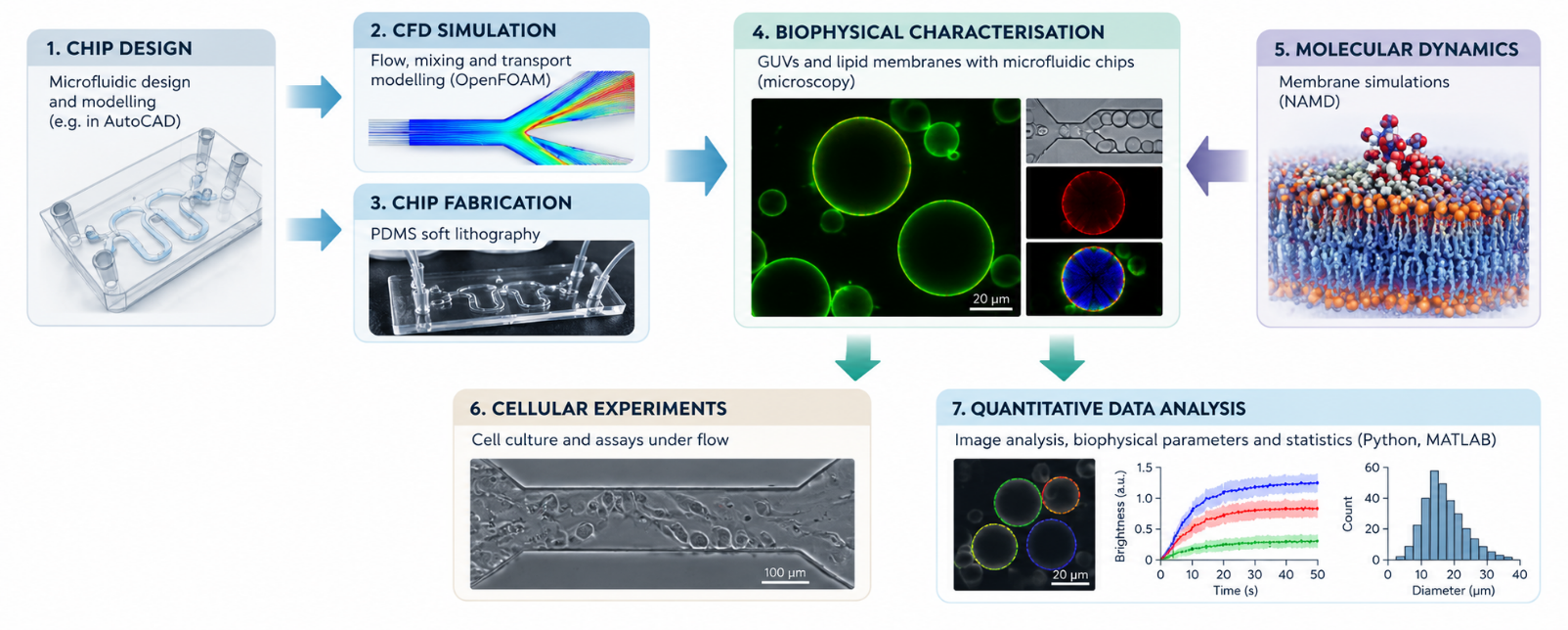
My research combines microfluidic engineering, microscopy, molecular dynamics simulations, computational fluid dynamics, and quantitative data analysis into an integrated experimental and computational workflow.
Moje badania łączą mikroprzepływy, biofizykę błon, dynamikę molekularną, modelowanie obliczeniowe i inżynierię biomedyczną. Koncentrują się na rozwijaniu platform eksperymentalnych i metod obliczeniowych do badania błon biologicznych, ich właściwości fizycznych oraz oddziaływań z cząsteczkami i komórkami.
Centralnym elementem mojej obecnej pracy jest rozwój platform mikroprzepływowych do eksperymentów biofizycznych. Układy te zapewniają precyzyjną kontrolę przepływu, transportu masy, dyfuzji i lokalnego środowiska eksperymentalnego, umożliwiając ilościowe badania błon lipidowych i żywych komórek.
Moje badania łączą inżynierię mikroprzepływową, mikroskopię, symulacje dynamiki molekularnej, obliczeniową mechanikę płynów i ilościową analizę danych w zintegrowany proces eksperymentalno-obliczeniowy.
Integrated experimental and computational workflow↗
02
Microfluidic Platforms for Membrane Biophysics
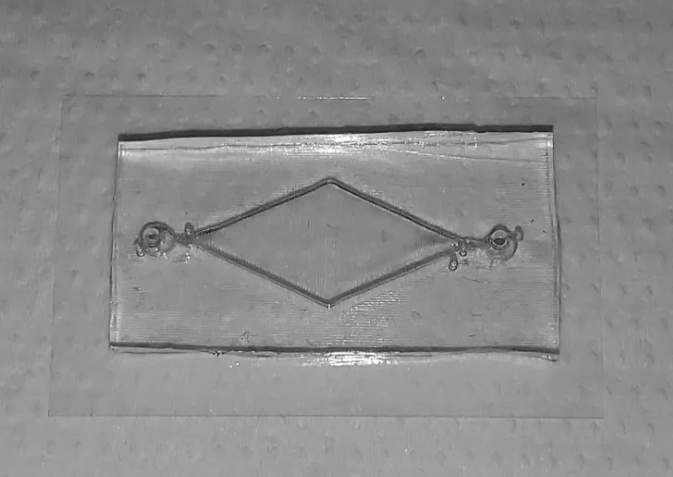
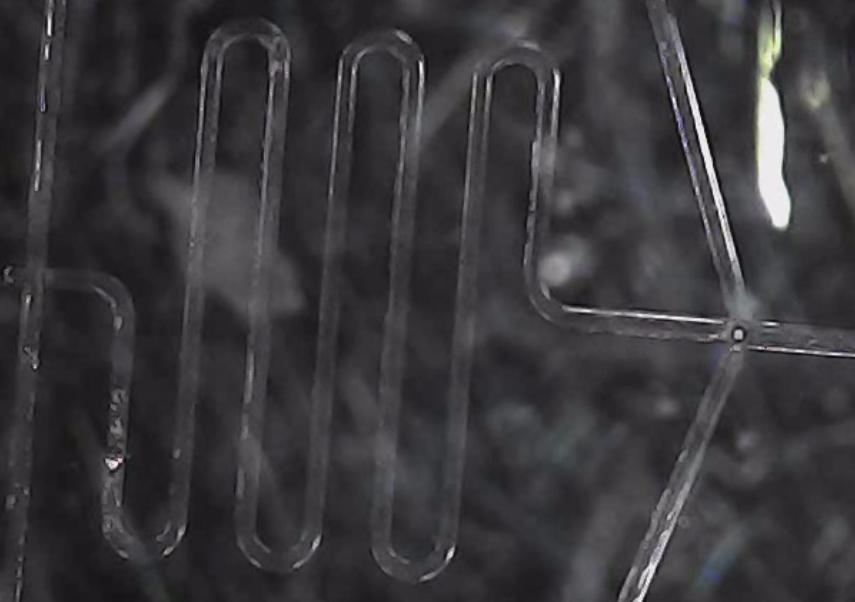
A major focus of my work is the development of microfluidic biophysical chips for the generation, manipulation, and characterisation of lipid membranes.
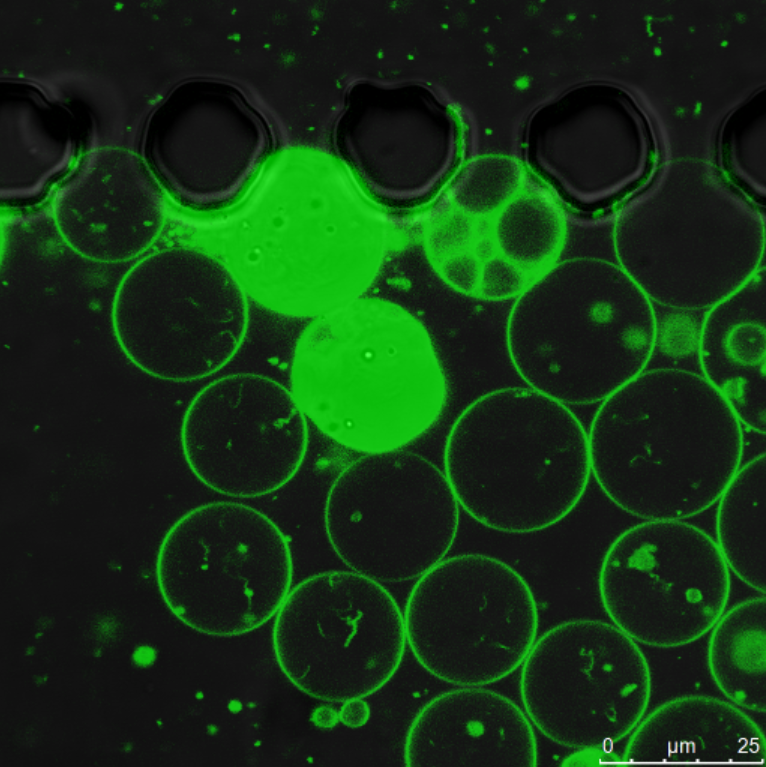
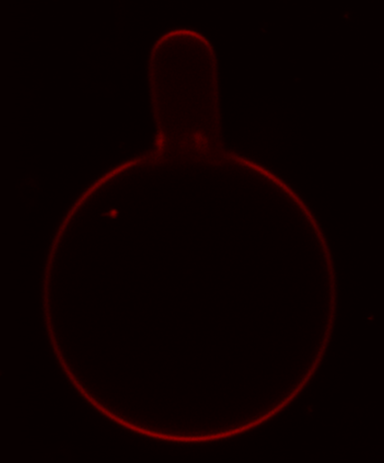
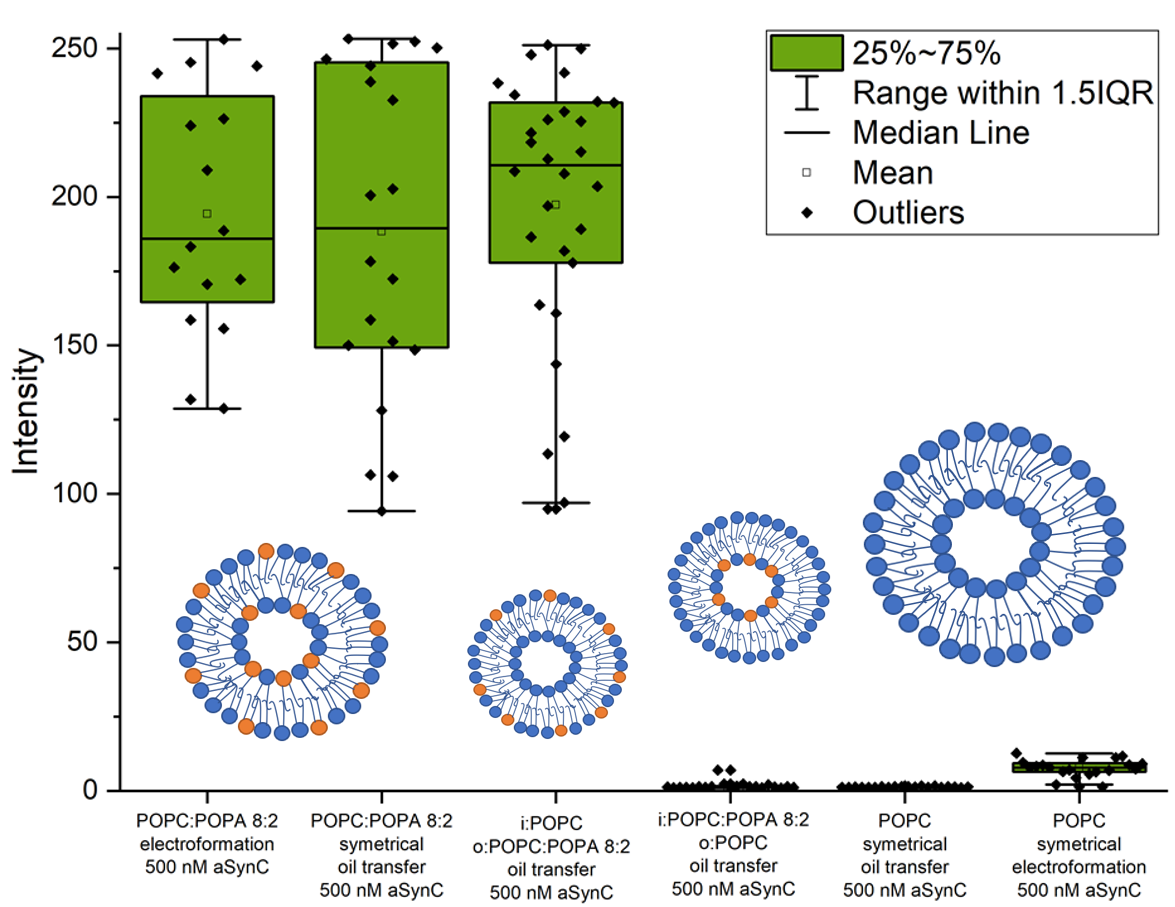
These platforms are used to generate and study giant unilamellar vesicles (GUVs), which provide well-controlled model systems for investigating membrane structure, mechanics, morphology, permeability, and interactions with membrane-active molecules.
Microfluidics offers precise control over the physical and chemical environment in which vesicles are generated and analysed. This allows us to study membrane behaviour under defined flow and transport conditions while combining microfluidic operation with fluorescence and confocal microscopy.
The resulting platforms provide a controlled experimental environment for studying membrane properties and for testing hypotheses derived from molecular and theoretical models.
Głównym obszarem mojej pracy jest rozwój biofizycznych mikroukładów przepływowych do wytwarzania, manipulowania i charakteryzowania błon lipidowych.
Platformy te służą do wytwarzania i badania olbrzymich pęcherzyków jednolamelarnych (GUV), które stanowią dobrze kontrolowane układy modelowe do badania struktury, mechaniki, morfologii i przepuszczalności błon oraz ich oddziaływań z cząsteczkami aktywnymi błonowo.
Mikroprzepływy zapewniają precyzyjną kontrolę środowiska fizycznego i chemicznego, w którym pęcherzyki są wytwarzane i analizowane. Pozwala to badać zachowanie błon w określonych warunkach przepływu i transportu, łącząc pracę układów mikroprzepływowych z mikroskopią fluorescencyjną i konfokalną.
Otrzymane platformy zapewniają kontrolowane środowisko eksperymentalne do badania właściwości błon i testowania hipotez wynikających z modeli molekularnych i teoretycznych.
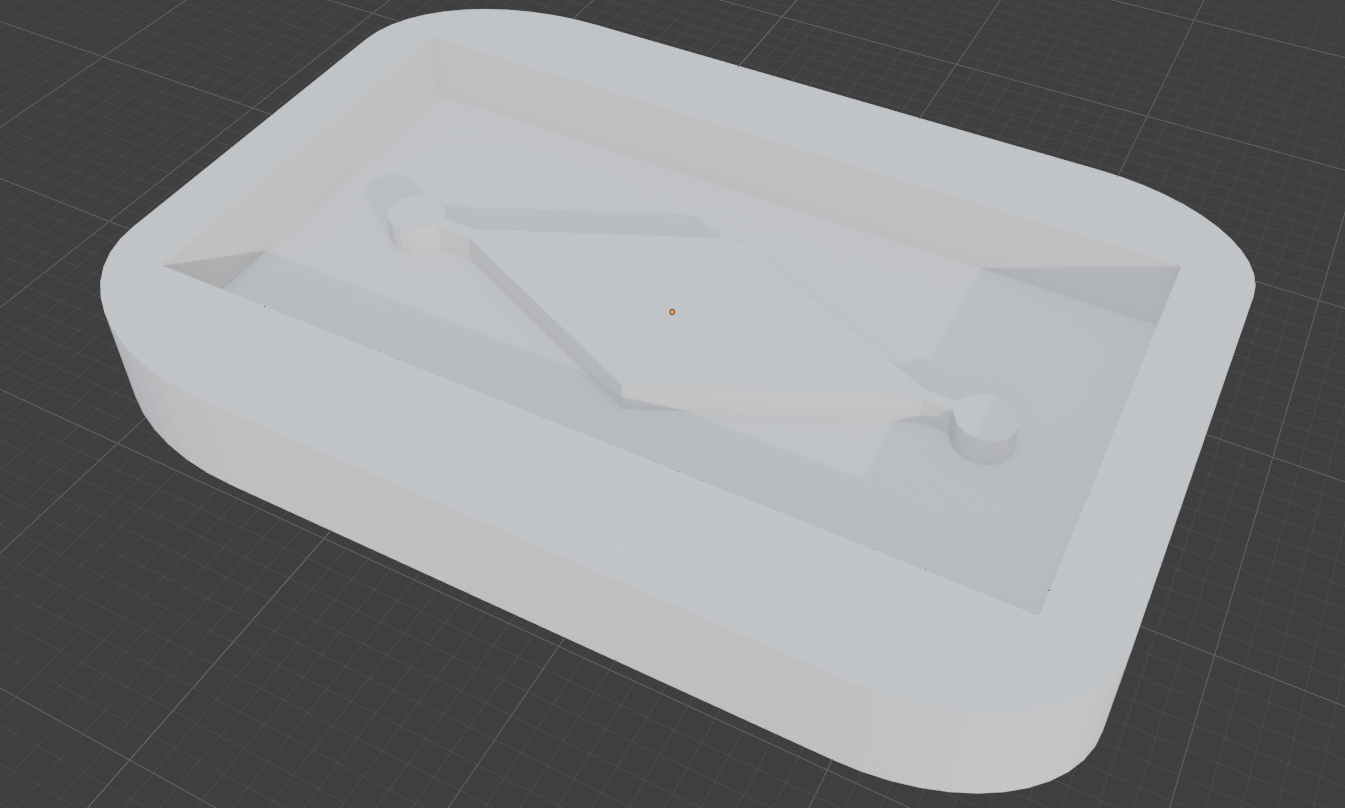
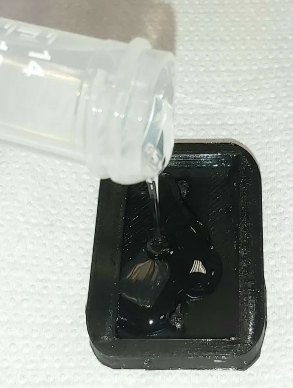
Microfluidic chip↗Microfluidic chip fabrication↗Microfluidic chamber under the microscope↗
03
Molecular Dynamics and Membrane Biophysics
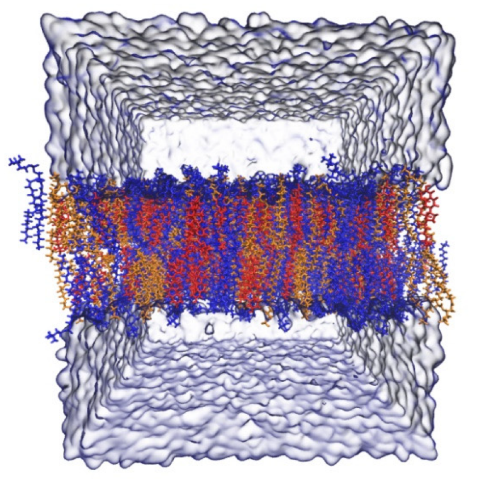
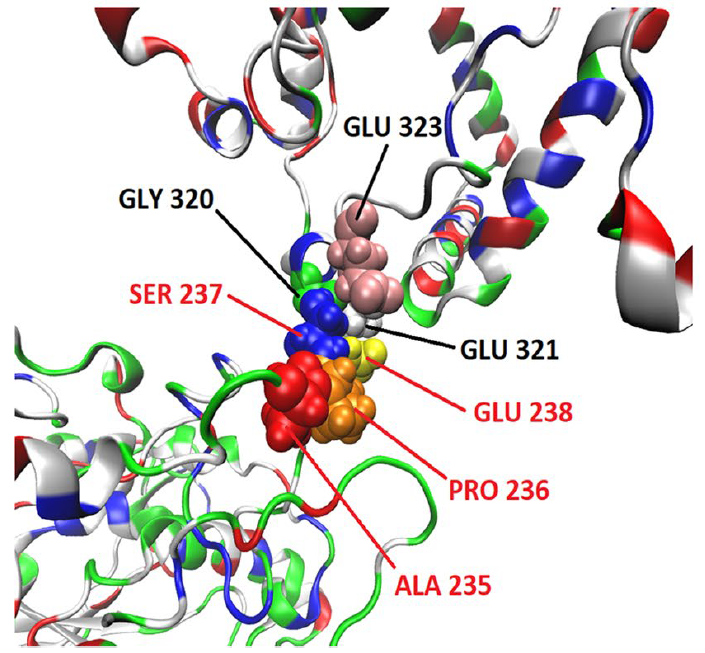
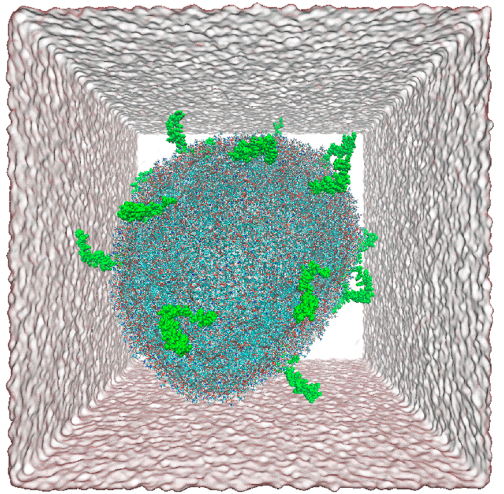
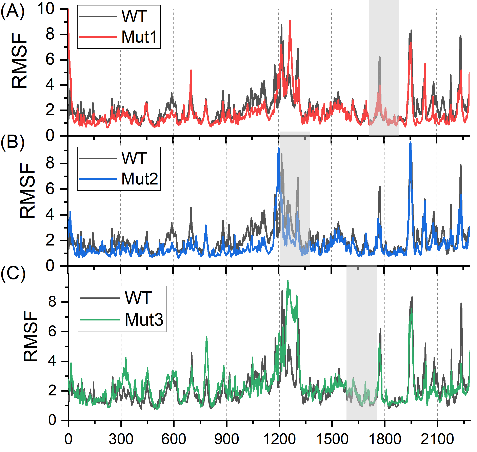
The experimental microfluidic work is complemented by molecular dynamics (MD) simulations, primarily using NAMD. MD simulations are used to investigate membrane structure and dynamics at the molecular scale, including interactions between lipid bilayers and membrane-active molecules or peptides. This provides a computational framework for interpreting experimental observations and for studying mechanisms that are difficult to access directly through experiments.
An important aspect of my research is therefore the connection between molecular-scale simulations and experimentally accessible membrane properties.
This multiscale approach makes it possible to connect molecular mechanisms with observations obtained from model membrane systems and, subsequently, biological experiments.
Eksperymentalne badania mikroprzepływowe są uzupełniane symulacjami dynamiki molekularnej (MD), prowadzonymi głównie z wykorzystaniem NAMD. Symulacje MD służą do badania struktury i dynamiki błon w skali molekularnej, w tym oddziaływań między dwuwarstwami lipidowymi a cząsteczkami lub peptydami aktywnymi błonowo. Tworzy to podstawę obliczeniową do interpretacji obserwacji eksperymentalnych i badania mechanizmów, do których trudno dotrzeć bezpośrednio w eksperymentach.
Ważnym aspektem moich badań jest zatem powiązanie symulacji w skali molekularnej z właściwościami błon dostępnymi w pomiarach eksperymentalnych.
To wieloskalowe podejście umożliwia łączenie mechanizmów molekularnych z obserwacjami uzyskanymi w modelowych układach błonowych, a następnie w eksperymentach biologicznych.
Molecular dynamics model of a lipid membrane↗Molecular interactions and residue-level structure↗Molecular simulation system↗
04
Experimental Studies of Membranes Systems
The microfluidic and membrane platforms are used to investigate dynamic membrane processes, including interactions of molecules with lipid bilayers, membrane deformation, permeability-related phenomena, and morphological changes.
Working with controlled model membrane systems allows individual physical mechanisms to be investigated in a simplified and reproducible environment before moving towards more complex biological systems.
This creates a progression from defined lipid membranes and GUVs to cellular systems, while maintaining quantitative control over the experimental environment.
Platformy mikroprzepływowe i błonowe służą do badania dynamicznych procesów błonowych, w tym oddziaływań cząsteczek z dwuwarstwami lipidowymi, deformacji błon, zjawisk związanych z przepuszczalnością i zmian morfologicznych.
Praca z kontrolowanymi modelowymi układami błonowymi pozwala badać poszczególne mechanizmy fizyczne w uproszczonym i powtarzalnym środowisku przed przejściem do bardziej złożonych układów biologicznych.
Umożliwia to przejście od zdefiniowanych błon lipidowych i GUV do układów komórkowych przy zachowaniu ilościowej kontroli środowiska eksperymentalnego.
Membrane dynamics: microscopy sequenceFluorescence microscopy of vesicles↗Membrane morphology↗
05
Cell Culture Under Flow
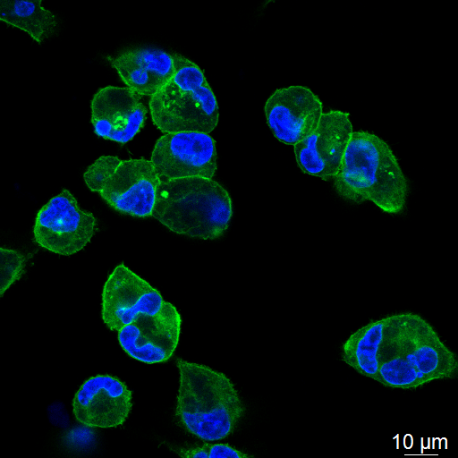
An important development of the microfluidic platform has been its extension from model membranes to living cell cultures under flow.
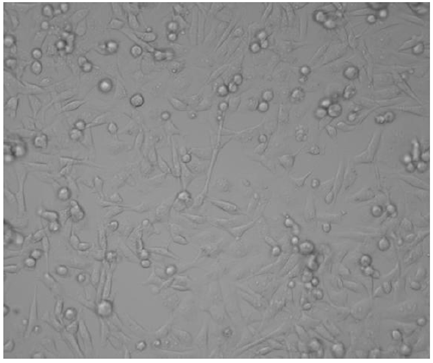
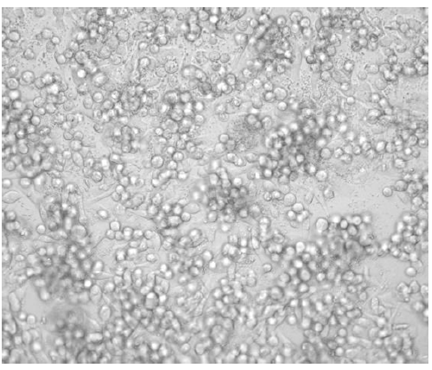
We have successfully established cell culture in continuous flow within our microfluidic chips, demonstrating that the devices can support experiments involving living cells under controlled hydrodynamic conditions.
This creates an important bridge between membrane biophysics and cellular-level experiments. Instead of studying cells only under static culture conditions, the microfluidic environment allows us to investigate cellular behaviour under defined flow and transport conditions.
Ważnym etapem rozwoju platformy mikroprzepływowej było rozszerzenie jej zastosowania z modelowych błon na hodowle żywych komórek w warunkach przepływu.
Z powodzeniem ustanowiliśmy hodowlę komórkową w ciągłym przepływie w naszych mikroukładach, wykazując, że urządzenia te umożliwiają eksperymenty z żywymi komórkami w kontrolowanych warunkach hydrodynamicznych.
Tworzy to ważne połączenie między biofizyką błon a eksperymentami na poziomie komórkowym. Zamiast badać komórki wyłącznie w statycznych warunkach hodowli, środowisko mikroprzepływowe pozwala analizować ich zachowanie w określonych warunkach przepływu i transportu.
classical cell↗cell cultures in flow↗Fluorescence microscopy of cells↗
06
Computational Fluid Dynamics
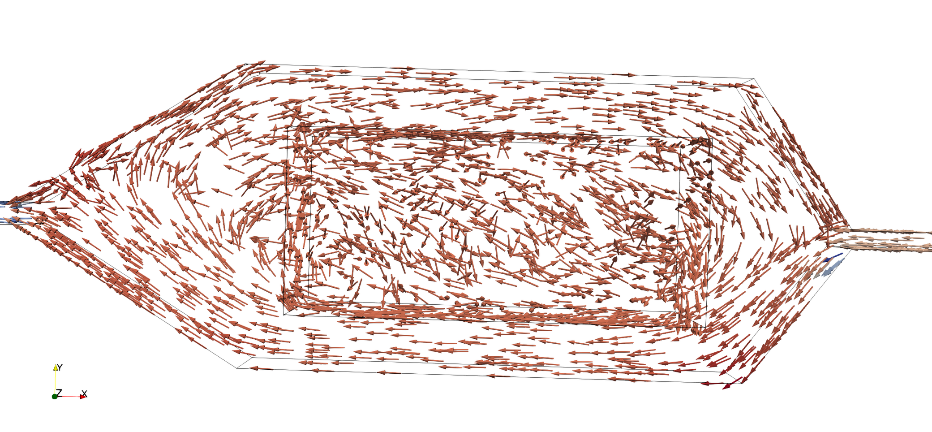
The development of microfluidic devices is supported by computational fluid dynamics (CFD).
I use OpenFOAM to model flow and transport phenomena inside microfluidic systems, including velocity fields, mixing, diffusion, mass transport, and residence-time behaviour. CFD is used as part of the device-development process rather than as a separate computational activity. Numerical simulations help evaluate and optimise microfluidic geometries, understand experimental conditions, and interpret biological and biophysical observations.
The combination of simulation and experiment is particularly important for developing reproducible microfluidic systems in which local flow and transport conditions directly affect the biological experiment.
Rozwój urządzeń mikroprzepływowych jest wspierany przez obliczeniową mechanikę płynów (CFD).
Wykorzystuję OpenFOAM do modelowania przepływu i zjawisk transportowych wewnątrz układów mikroprzepływowych, w tym pól prędkości, mieszania, dyfuzji, transportu masy i charakterystyki czasu przebywania. CFD jest częścią procesu rozwoju urządzeń, a nie odrębną aktywnością obliczeniową. Symulacje numeryczne pomagają oceniać i optymalizować geometrie mikroprzepływowe, rozumieć warunki eksperymentalne oraz interpretować obserwacje biologiczne i biofizyczne.
Połączenie symulacji i eksperymentu jest szczególnie ważne w rozwijaniu powtarzalnych układów mikroprzepływowych, w których lokalne warunki przepływu i transportu bezpośrednio wpływają na eksperyment biologiczny.
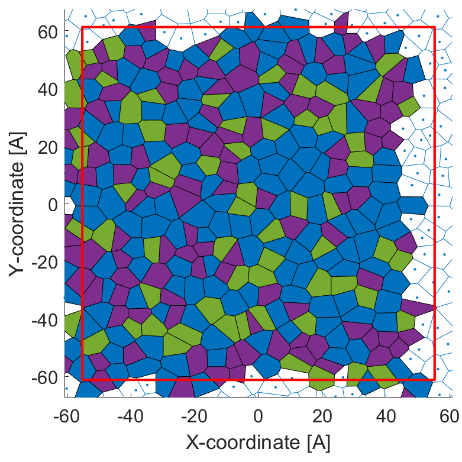
Experimental and computational results are analysed using custom scripts developed in Python and MATLAB. These tools are used for quantitative image analysis, statistical analysis, extraction of biophysical parameters, data processing, and integration of experimental results with computational models. The aim is to move from qualitative microscopy observations towards quantitative and reproducible measurements that can be compared with simulations and used for model validation.
Wyniki eksperymentalne i obliczeniowe są analizowane za pomocą autorskich skryptów w Pythonie i MATLAB-ie. Narzędzia te służą do ilościowej analizy obrazów, analizy statystycznej, wyznaczania parametrów biofizycznych, przetwarzania danych oraz integracji wyników eksperymentalnych z modelami obliczeniowymi. Celem jest przejście od jakościowych obserwacji mikroskopowych do ilościowych i powtarzalnych pomiarów, które można porównywać z symulacjami i wykorzystywać do walidacji modeli.
Quantitative membrane analysis↗Biophysical measurements and statistical analysis↗Quantitative analysis of simulation data↗
08
Multiscale Research Framework
My research connects several complementary levels of biological and physical description:
Moje badania łączą kilka uzupełniających się poziomów opisu biologicznego i fizycznego:
Molecular scale - Molecular dynamics simulations of lipid membranes and membrane-active molecules.
Microfluidic scale - Engineering of controlled environments for membrane and cellular experiments.
Device scale - CFD modelling of flow, mixing, diffusion, and mass transport.
Biophysical scale - Experimental characterisation of GUVs and lipid membrane behaviour.
Cellular scale - Cell culture and biological experiments under controlled flow.
Data scale - Quantitative analysis and integration of experimental and computational data.
This framework allows physical mechanisms to be studied across scales rather than as isolated phenomena, connecting molecular interactions with membrane behaviour and ultimately with cellular responses.
09
Research Through BSc Projects
The research environment also supports interdisciplinary engineering projects combining microfluidics, membrane biophysics, molecular simulation, biomedical engineering, and computational methods.
Examples of diploma projects I have supervised include:
Środowisko badawcze wspiera również interdyscyplinarne projekty inżynierskie łączące mikroprzepływy, biofizykę błon, symulacje molekularne, inżynierię biomedyczną i metody obliczeniowe.
Przykłady prac dyplomowych, które prowadziłem, obejmują:
Microfluidic Formulation of Lipid Nanocarriers
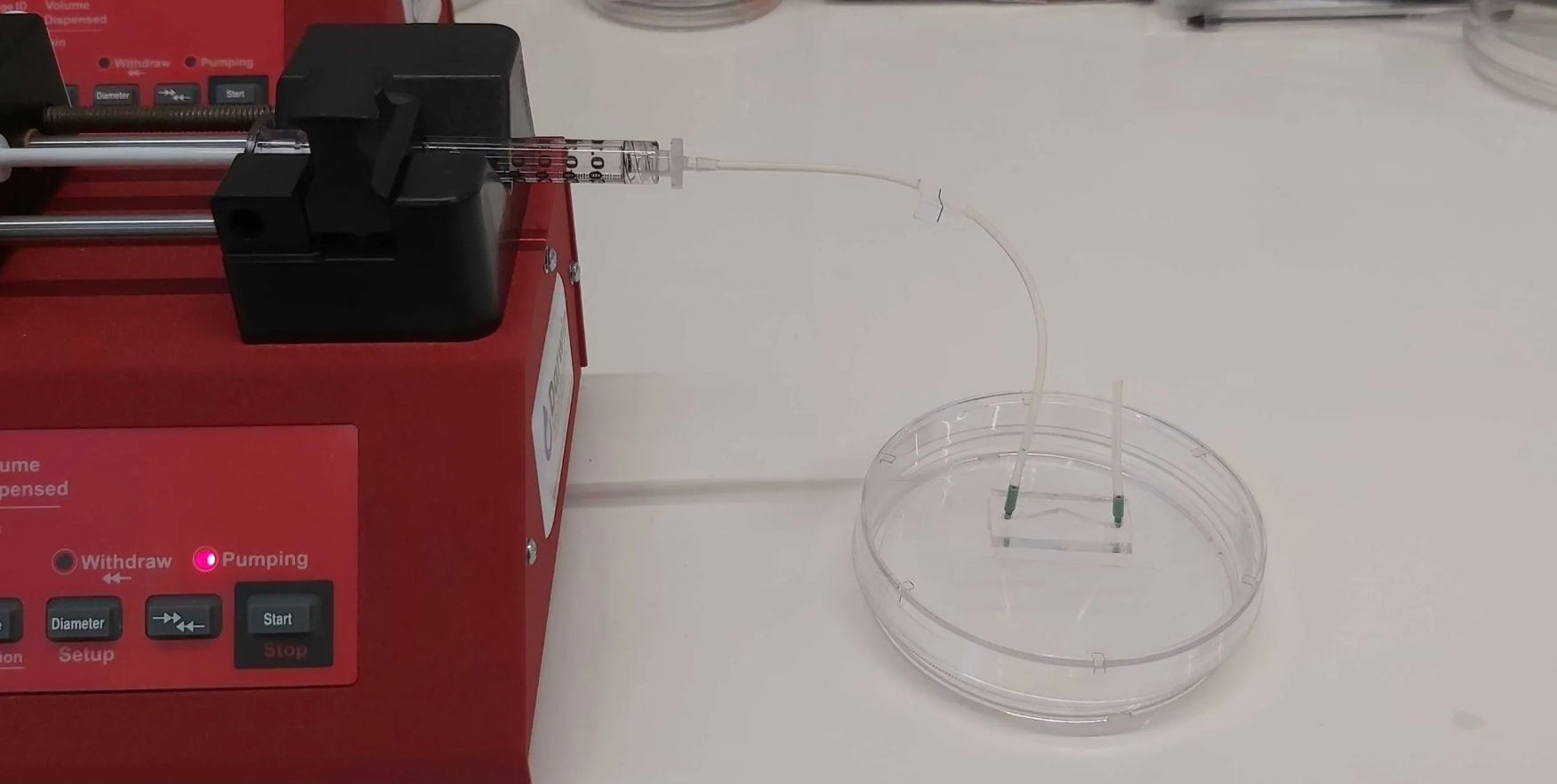
Microfluidic formulation of nanolipid carriers using micromixers and Dean vortices for active compound encapsulation
An engineering project focused on microfluidic mixing and secondary Dean-flow effects for the formulation of lipid-based nanocarriers and encapsulation of active substances.
Molecular Dynamics of Membrane-Active Peptides
Influence of membrane-active peptides from Crotalus durissus terrificus venom using Molecular Dynamics Simulation
A computational project investigating interactions between membrane-active peptides and lipid bilayers using molecular dynamics simulations.
Liposomal Encapsulation and Coating
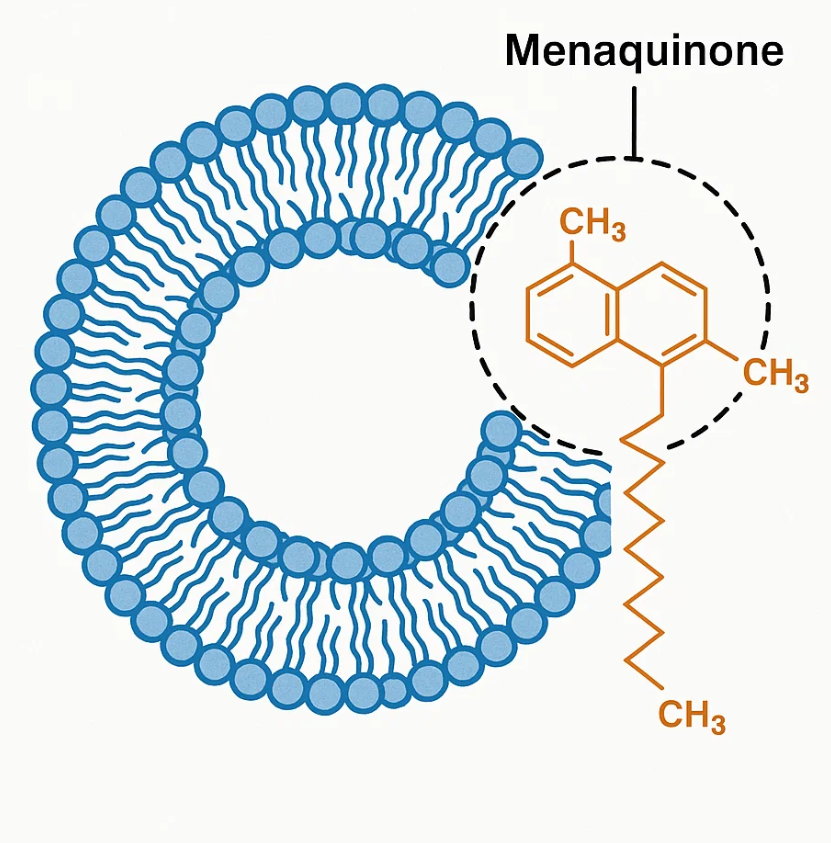
Evaluation of the encapsulation efficiency of vitamin K2 in a liposomal carrier
An experimental project focused on lipid-based encapsulation and quantitative evaluation of a liposomal delivery system.
Pharmacokinetic Modelling
Clinical Decision Support Application for Vancomycin Therapeutic Drug Monitoring Using Pharmacokinetic Modeling
A project combining pharmacokinetic modelling, biomedical data analysis, and software engineering to support therapeutic drug monitoring.
10
Additional Application: Nanolipid Particles through Microfluidics
As an additional application of the microfluidic technology, I also work on the microfluidic formulation of nanolipid particles (NLPs) and lipid-based delivery systems.
This direction involves the use of controlled microfluidic mixing and transport to investigate the formulation and encapsulation of active compounds in lipid-based nanocarriers.
While this is a more application-oriented branch of my work, it builds directly on the same expertise in microfluidic design, flow control, transport phenomena, lipid systems, and quantitative characterisation developed through the core membrane-biophysics research.
Dodatkowym zastosowaniem technologii mikroprzepływowej, nad którym pracuję, jest mikroprzepływowe wytwarzanie nanocząstek lipidowych (NLP) i lipidowych systemów dostarczania.
Kierunek ten obejmuje wykorzystanie kontrolowanego mieszania mikroprzepływowego i transportu do badania wytwarzania nanonośników lipidowych i enkapsulacji w nich związków aktywnych.
Choć jest to bardziej aplikacyjna gałąź moich badań, opiera się bezpośrednio na tych samych kompetencjach w zakresie projektowania mikroprzepływowego, kontroli przepływu, zjawisk transportowych, układów lipidowych i charakterystyki ilościowej, rozwijanych w podstawowych badaniach biofizyki błon.
Microfluidic formulation setup↗Lipid-based carrier and menaquinone↗
11
Research and Technology Development
The overarching goal of my work is to develop integrated experimental and computational platforms for quantitative biophysics.
Rather than treating microfluidics, molecular simulations, and biological experiments as separate activities, I combine them into a common research framework in which computational models inform experimental design and experimental observations are used to validate and refine those models. This approach provides a technological basis for research in membrane biophysics, biomimetic systems, cellular transport, microphysiological experimentation, and biomedical microdevices.
My work therefore combines microfluidic engineering, molecular dynamics, CFD, membrane biophysics, live-cell experiments, and quantitative data analysis to develop reproducible experimental systems for investigating biological processes across multiple scales.
Nadrzędnym celem mojej pracy jest rozwijanie zintegrowanych platform eksperymentalnych i obliczeniowych do biofizyki ilościowej.
Zamiast traktować mikroprzepływy, symulacje molekularne i eksperymenty biologiczne jako odrębne działania, łączę je we wspólnych ramach badawczych, w których modele obliczeniowe wspierają projektowanie eksperymentów, a obserwacje eksperymentalne służą do walidacji i doskonalenia tych modeli. Podejście to tworzy podstawę technologiczną dla badań w biofizyce błon, układach biomimetycznych, transporcie komórkowym, eksperymentach mikrofizjologicznych i mikrourządzeniach biomedycznych.
Moja praca łączy zatem inżynierię mikroprzepływową, dynamikę molekularną, CFD, biofizykę błon, eksperymenty z żywymi komórkami i ilościową analizę danych w celu rozwijania powtarzalnych układów eksperymentalnych do badania procesów biologicznych w wielu skalach.
DONA
Recent publications
Latest five journal articles and book chapters
2026Journal article
Dominik Borek-Drabik. Lipid oxidation effect on membrane properties in phosphatidylinositol- and phosphatidylserine-enriched neuronal biomimetic models. Journal of Physical Chemistry B 2026 vol. 130, nr 31, s. 7901-7908.
Dominik Borek-Drabik. Breaking the balance: lipid giant vesicles and membrane simulation as a windows into lipid membrane parameters homeostatic failure. W: Advances in biomembranes and lipid self-assembly / eds. Aleš Iglič, Michael Rappolt, Patricia Losada-Pérez. London [i in.]: Elsevier; Academic Press, 2025. s. 148-166. (Advances in Biomembranes and Lipid Self-Assembly; vol. 42).
Ambili Ramanthrikkovil Variyam, Mateusz Rzycki, Ramesh Nandi, Alexei A Stuchebrukhov, Dominik Borek-Drabik, Nadav Amdursky. The role of lipid phase and temperature in proton barrier and proton migration on biological membranes. Chemical Science 2025 vol. 16, nr 12, s. 5194-5204.
Ambili Ramanthrikkovil Variyam, Mateusz Rzycki, Anna Yucknovsky, Alexei A Stuchebrukhov, Dominik Borek-Drabik, Nadav Amdursky. Proton diffusion on the surface of mixed lipid membranes highlights the role of membrane composition. Biophysical Journal 2024 vol. 123, nr 24, s. 4200-4210.
Dominik Borek-Drabik, Piotr Hinc, Mareike Stephan, Rafaela R. M Cavalcanti, Aleksander Czogalla, Rumiana Dimova. Effect of leaflet asymmetry on the stretching elasticity of lipid bilayers with phosphatidic acid. Biophysical Journal 2024 vol. 123, nr 16, s. 2406-2421.